

Welcome! Come in and join us.

This toolkit is for people who use or want to use arts-based practices with young people and adults to co-create interventions to bring together people from different backgrounds, to dismantle hierarchies and challenge unequal power dynamics. It is for practitioners, researchers, funders and advocates.
The Welcome Toolkit takes you on a journey through a session with Stand & Be Counted where you will find ideas for how to embed four values in your practice we consider vital for building equity.
WELCOME
OWNERSHIP
FLEXIBILITY
LISTENING
We made this toolkit because we want to promote and support creative empowerment within arts initiatives. The Welcome Toolkit shares values, behaviours and activities we believe have the potential to support sharing power with people from a migrant background, not as participants or ‘service users’, but as leaders and experts with skills, knowledge, experience, and creativity.
We want to support the use of arts-based methods to safely engage, empower and co-create with people seeking sanctuary (refugees, asylum seekers, migrants), ensuring that these communities lead on decision-making, personal and community development. These modes of engagement can diversify workforces in the arts and deliver interventions to build the confidence and capacity for everyone to reach their potential in their own spaces of education, work, home, family, and community.
Each section of The Welcome Toolkit answers the following questions to guide the implementation of our four key values with fun, warmth and joy:
Why is this value important?
What does it involve?
How can we create this value?
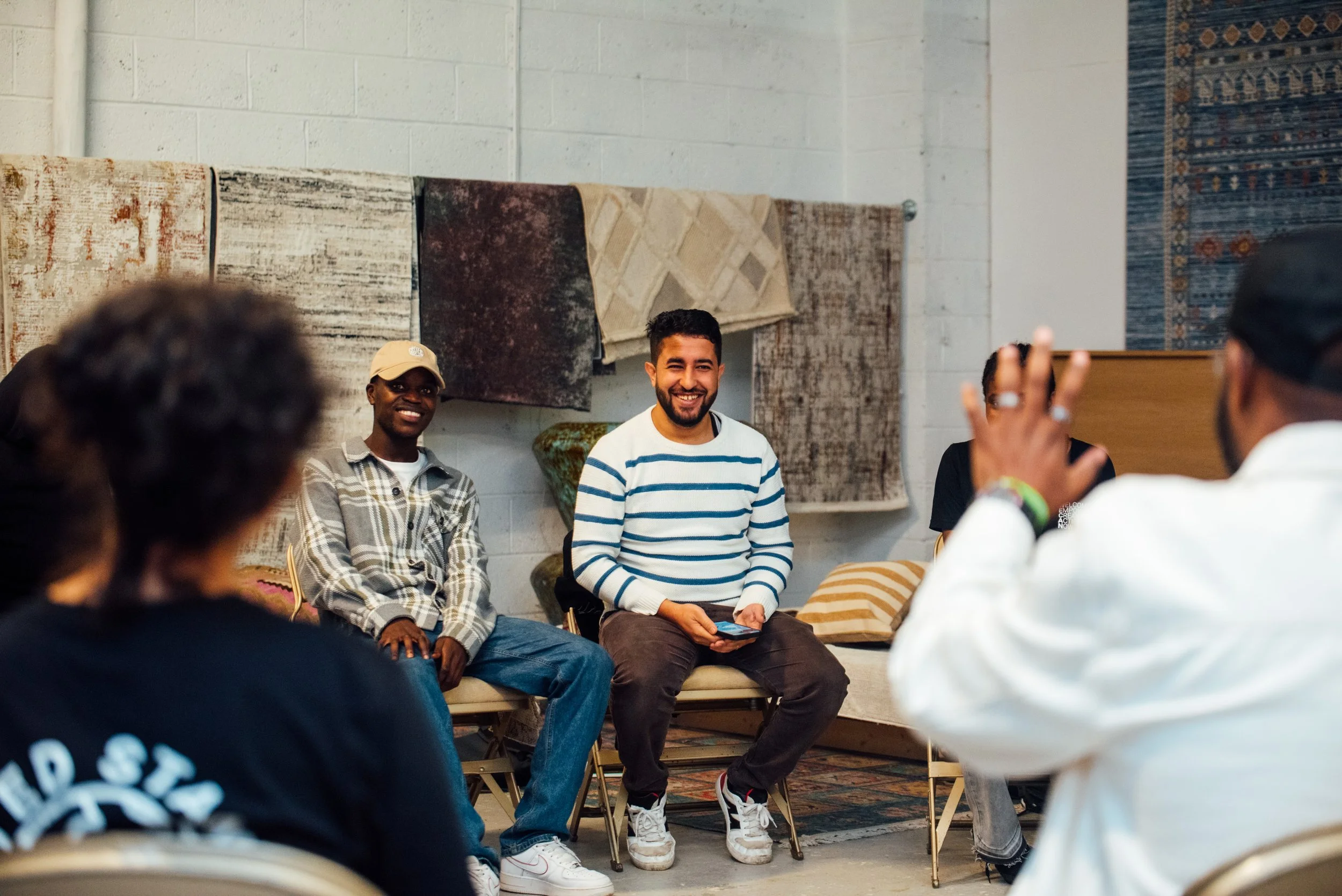
A vital element of this practice is flexibility and remaining responsive to those we are in a room with, at all times. Not every aspect of this guide will fit neatly with your context and there is no better insight than sharing a space together. We hope that this toolkit can support you to build your capacity to deliver accessible, safe, ambitious and invigorating arts engagement for people seeking sanctuary.
The Welcome Toolkit leads the reader through a session; the behind the scenes planning and setup, the welcoming into a space, the activities, pointers on attending and the wellbeing of all involved.
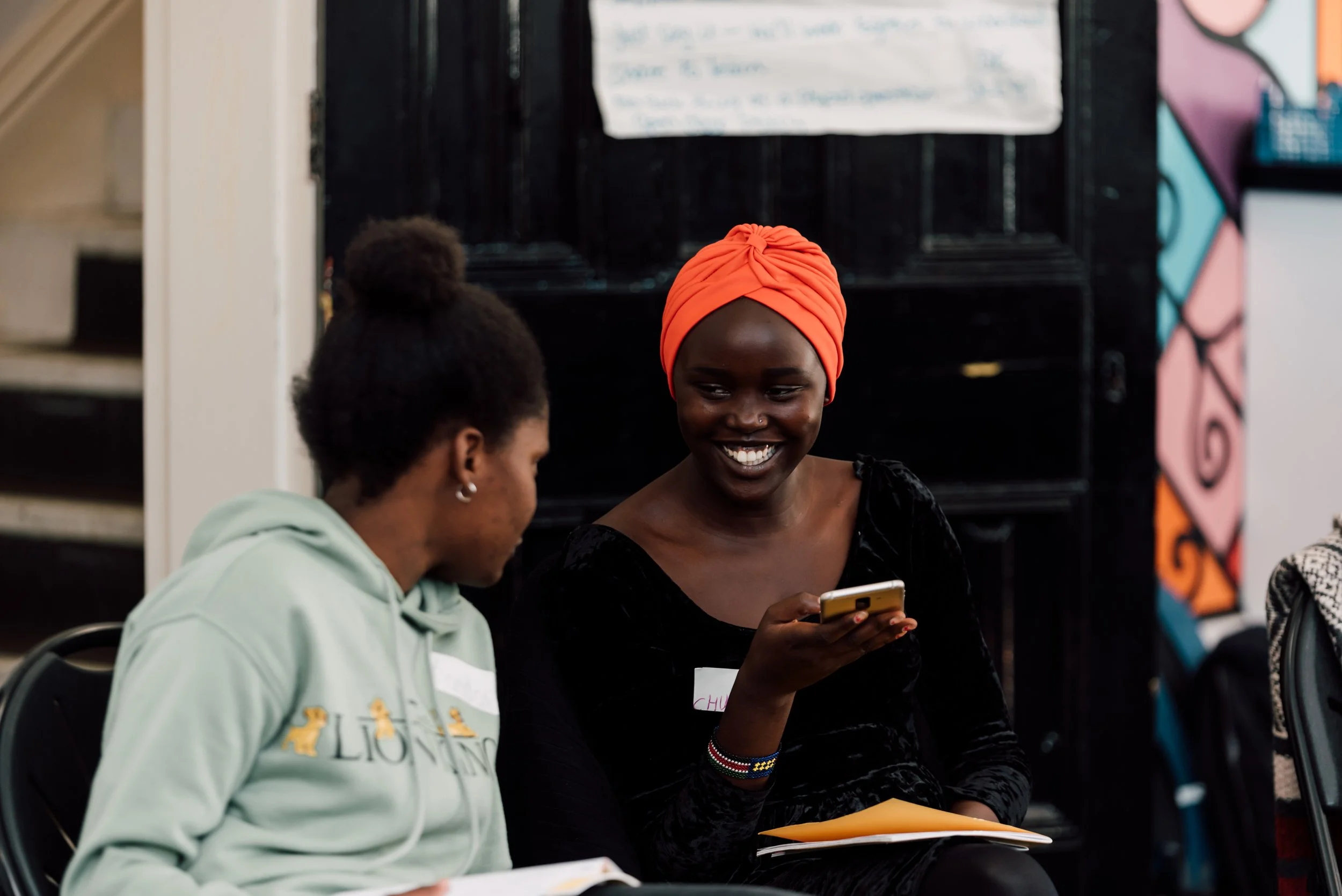
Our guide to welcoming and listening aims to:
Promote the value of co-creation and listening
recognise aspects specific to co-creating with people seeking sanctuary
offer practical tools for embedding safe, transformative collaboration in your practice
Acknowledge the resources, time and care needed to engage in co-created arts in an ethical and supportive way
Highlight how developing creative skills builds valuable interpersonal, leadership and communications skills that support education and employment outcomes
Humanise, ensuring people seeking sanctuary have spaces to be themselves removed of that status
Ensure audiences of art created by people seeking sanctuary understand shared beliefs, values, and connections.
The Welcome Toolkit was created with Soap Box Collective - a collaboration between people who came to the UK from around the world to seek sanctuary from persecution, alongside arts practitioners, film-makers and university researchers. Read more about us in the ‘About Us’ section at the end!
The approaches we share in this toolkit may also be useful to developing arts-based practices with a range of groups of people who use different languages and ways of communicating and who have a range of cultural and racialised identities.
This toolkit focuses on best practice when working with young people and adults. Stand & Be Counted deliver similar programmes for children and offer insight and guidance for this work elsewhere.
This practice exists at the exciting intersection of arts and social justice. We know effective change and progress is made in collaboration with one another. Transformation thrives when hierarchical structures are reduced. Our approaches are designed to generate equity and build spaces within which a balance of power and autonomy can be achieved.
Let’s get into it!
The Welcome Toolkit
-
1 - Nuts & Bolts
-
Behind The Scenes
Explore the essentials to put in place before starting a new programme, group or session. This section is about recognising the time, effort and planning required to enable arts co-creation before we even begin.
-
Communicate with funders & collaborators
Process over output—always. Funding applications demand clarity, but too much detail can box in the work before it even begins. How do we convey confidence without closing down possibility?
-
Safeguarding and Wellbeing
Arts-based work with diverse groups never exists in a vacuum—creative programmes connect people to wider support they often need. How can we create safe, supportive pathways that protect both the people we work with and ourselves?
-
Building practice informed by lived experience
If you don’t come from a migrant or forced-migration background but want to engage people seeking sanctuary in arts initiatives, can you collaborate with a facilitator with lived experience to guide every stage of your programme—from inception through delivery and follow-up? What does true co-leadership look like in action?
-
Recruit: Getting people into the room
You might already be working with a group or starting from scratch, in both cases this is an exciting opportunity to tailor delivery to the individuals that join each week. How can you reduce the unknowns in the recruitment process to create comfort in attending a new group or activity?
-
Activities
How can you keep sessions exciting while responding to the room in real time?
-
-
2 - Welcome
-
Lesson 1: Why
We start every session with a warm welcome to set a positive tone. Simple check-ins and circle games help everyone connect and feel included—how will you make your first moments count?
-
Lesson 2: How?
Your welcome shapes the session—how can you create a warm, engaging start that helps everyone feel safe and connected?
-
-
3 - Ownership
-
Lesson 1: Why
How do we ensure our spaces support people to connect, flatten hierarchies, reverse power dynamics, and even invite a little silliness, boosting confidence and creativity.
-
Lesson 2: What?
How can you create a space where everyone feels included, valued, and empowered? By giving choice, celebrating contributions, and using playful arts activities, participants can connect, explore, and collaborate with confidence and creativity.
-
Lesson 3: How?
How can activity build confidence, skills and leadereship?
-
-
4. Flexibility…fun and joy
-
Lesson 1: Why?
This section considers the practical elements, facilitator behaviours and qualities of makers that help to support agility and flexibility.
-
Lesson 2: What?
How can we create sessions that truly adapt to the moment? Flexibility combines practical elements like open-door attendance or adjusting plans, practitioner behaviours such as being agile, responsive, and fun, and co-creator or maker contributions.
-
Lesson 3: How?
How can surprise spark confidence and creativity? By keeping activities unplanned, participants try new things, have fun, and step out of their comfort zones—all in a safe, supportive space.
-
-
5. Listening
-
Lesson 1: Why?
This section emphasises listening as underpinning all other elements of inclusive practice.
-
Lesson 2: What?
How can we truly listen and celebrate participants? Notice what they share, capture their ideas, follow up on wellbeing, and recognise achievements, helping them see the skills and growth they’ve gained.
-
Lesson 3: How?
What activities and evaluation processes ensure active listening and methods to implement learning.
-
-
6. Collaborating
-
7. Co-creating Outcomes
-
8. Co-creating: Asylum and Immigration
-
9. Key Terms
-
About Us
-
Appendix